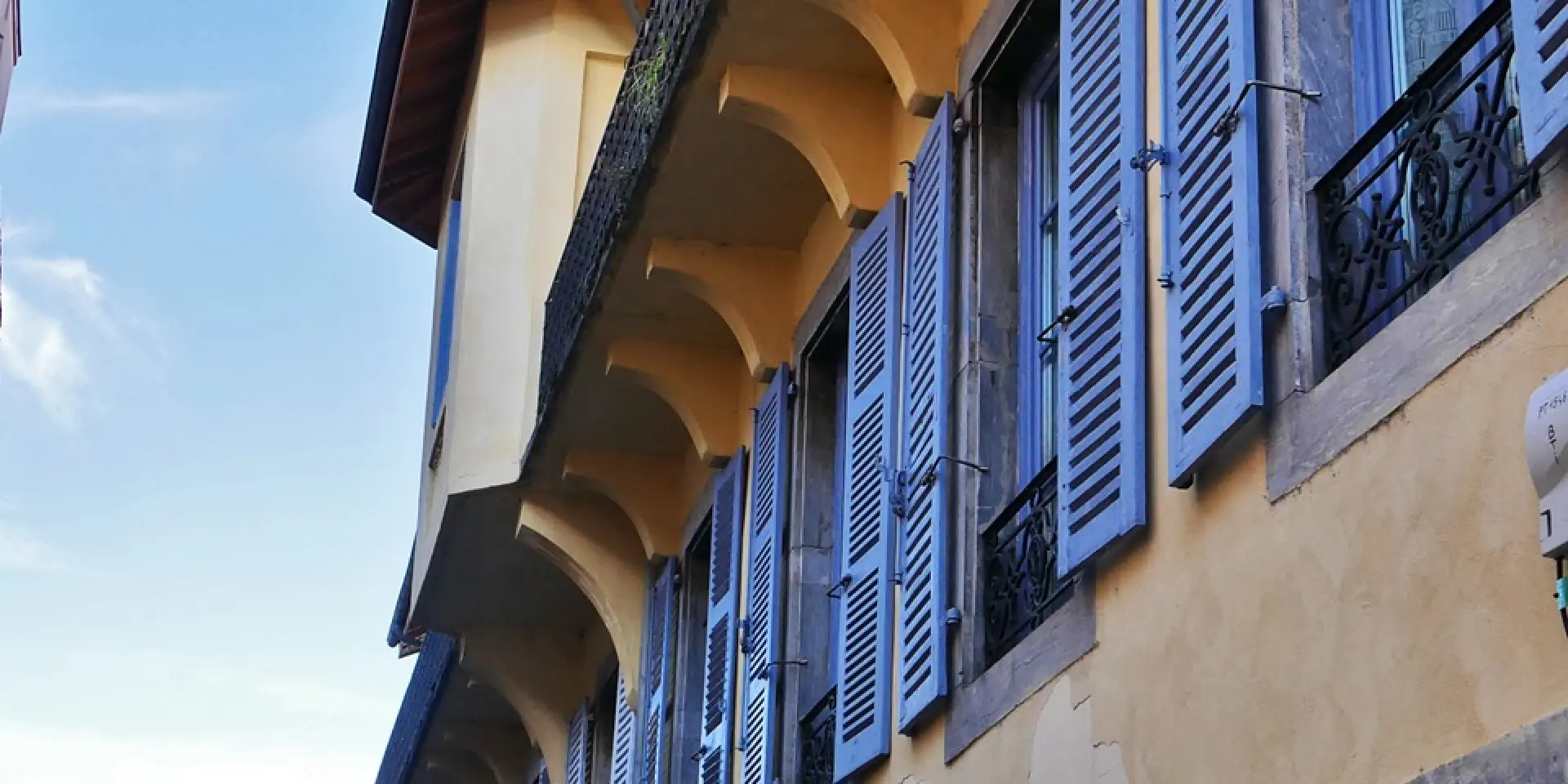
House on Rue Du Bourg
©

House on Rue Du Bourg

Lourdes The most beautiful façades

A façade is often a house’s calling card. Lourdes is full of beautiful façades that tell us a great deal about the history of a building and its owners.

A stroll with your eyes looking up

18th-century buildings

Our oldest buildings date back to the 18th century, and there are some fine examples to be admired in the upper town: on Rue du Baron Duprat, the house of Baron Jean-Pierre Duprat is a treasure of classical architecture, with its arched windows set in Lourdes stone, its mansard roof and its monumental porch.

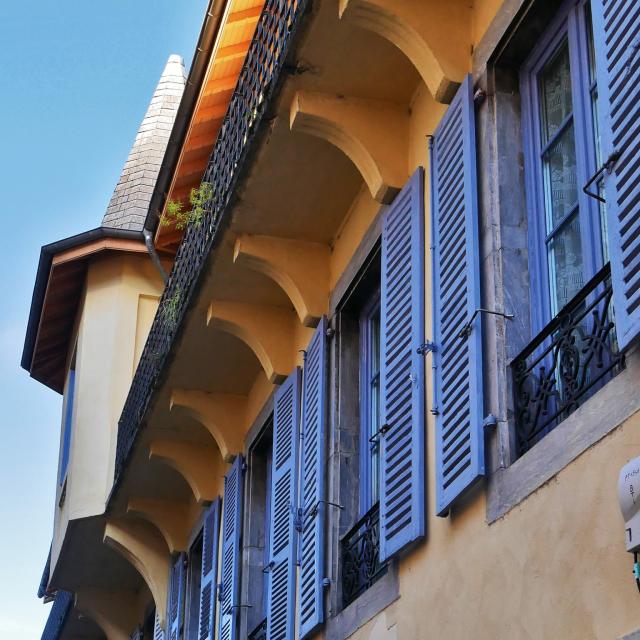
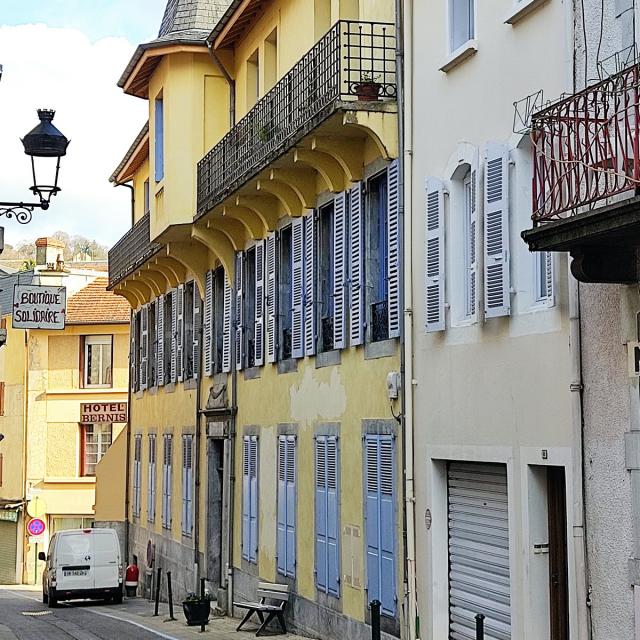
Not far away, on Rue du Bourg, the houses of General Maransin, adorned with family coats of arms, catch the eye for the beauty of their windows and the choice of materials. In this architecture, Lourdes stone takes centre stage, but the ironwork and the wood of the front door enhance the bourgeois character of the façade. As you stroll down this street, your gaze will be drawn to other porches dating back many years and built using the same stone.
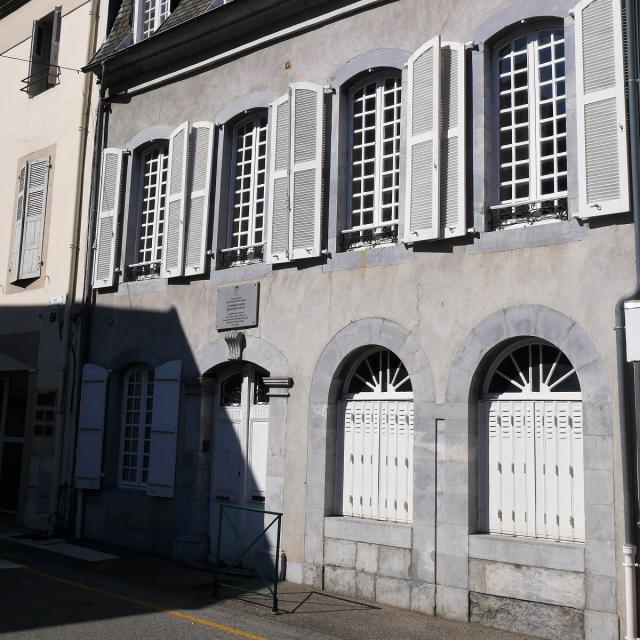
The Dembarrère House

As we walk down Rue du Bourg, it is the monumental façade of the Dembarrère house that catches our eye. The marble once again sets off the windows and doors; the intricately carved wood of the door, together with the ironwork, emphasises the majesty of the whole.

This monumental appearance is complemented by a bay window topped with a mock tower. This residence commemorates Jean Dembarrère (1747–1828), a general in the armies of the Revolution and the First Empire, who came from a long-established family in Lourdes. A leading military figure, he spent his final years in Lourdes, where his name remains associated with this remarkable house, which still bears witness today to the prestige and influence of the Dembarrère family in the town.

Lourdes in the 19th century

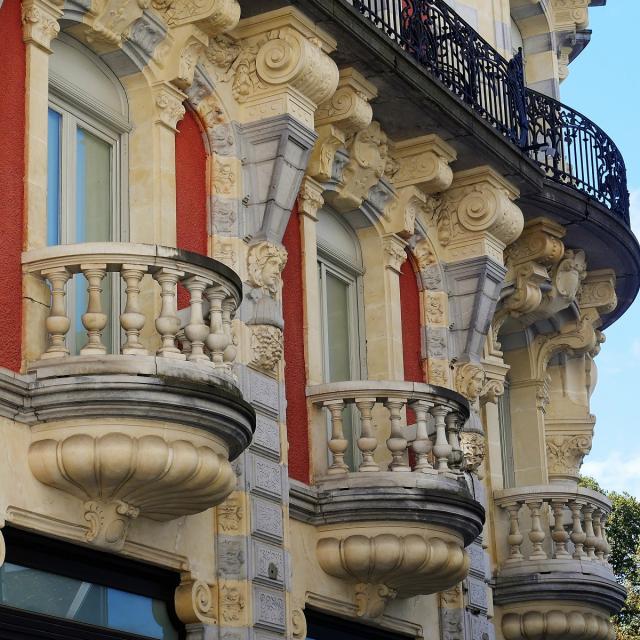
The second half of the 19th century was characterised above all by the Rococo façades designed by Jean-Marie Lacrampe. In the upper town, be sure to admire the three villas that now form the town hall, or the Château de Soum. Its eclectic style is a blend of Baroque, Classical and traditional styles all at once. His finest achievement in this regard remains the façade ofthe Hôtel Moderne, which still catches the eye of passers-by and exudes exuberant luxury. Step inside to admire Louis Majorelle’s Art Nouveau décor!

ThePlace du Marcadal also offers a fine example of 19th-century urban architecture, notably the ornate balconies of the Pharmacy and its curious tower, a former astronomical observatory.

In the Garnavie neighbourhood, once a working-class area, you can see a façade inspired byrural architecture, with its south-facingwooden gallery, which in this case leads to the rooms on the upper floors. In the same neighbourhood, a miniature house perched on a rock delights us and reminds us of the quarrymen who once worked in this suburb.

Hotels in Lourdes

The façades of the city’s hotels also take us on a journey through a whole range of architectural styles.

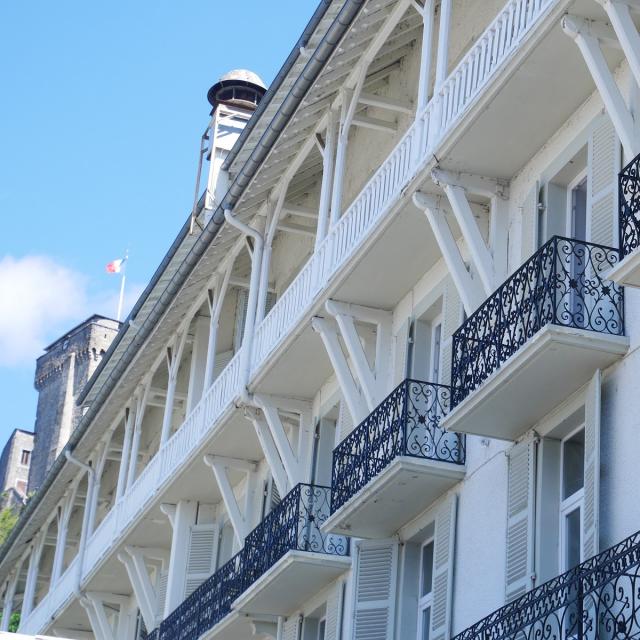
The Belfry echoesthe seaside architecture of the major Basque resorts; theGallia-Londres boasts a classical façade punctuated by large windows, hinting at understated luxury within; whilst the Panorama retains the rounded shape of the grand panorama it replaced, with a modern twist inspired byocean liner architecture.

Walking up this former Peyramale quarry, you can also admire façades from the 2000s, such as those of the Astrid or the Padoue, where glass serves to lighten the weight of the architecture…

As you walk up Boulevard de la Grotte, don’t miss the façade of Les Ambassadeurs, reminiscent of the grand hotels of the Côte d’Azur; right next to it is the Belge and Madrid, whose blend of disparate materials and interplay of straight and curved lines draws us in. The Hôtel de Genève reminds us that in 1890, the favoured architectural style was that of spa resorts, and it is the Cauteret style that predominates.

Our answers to your questions

Continue An adventure in Lourdes!