Château Otlourdes Maximemarrimpoey 2023 1
©

Château Otlourdes Maximemarrimpoey 2023 1

The Fortified Castle of Lourdes 

Sentinel of the Pyrenees

The castle, its history and its architecture

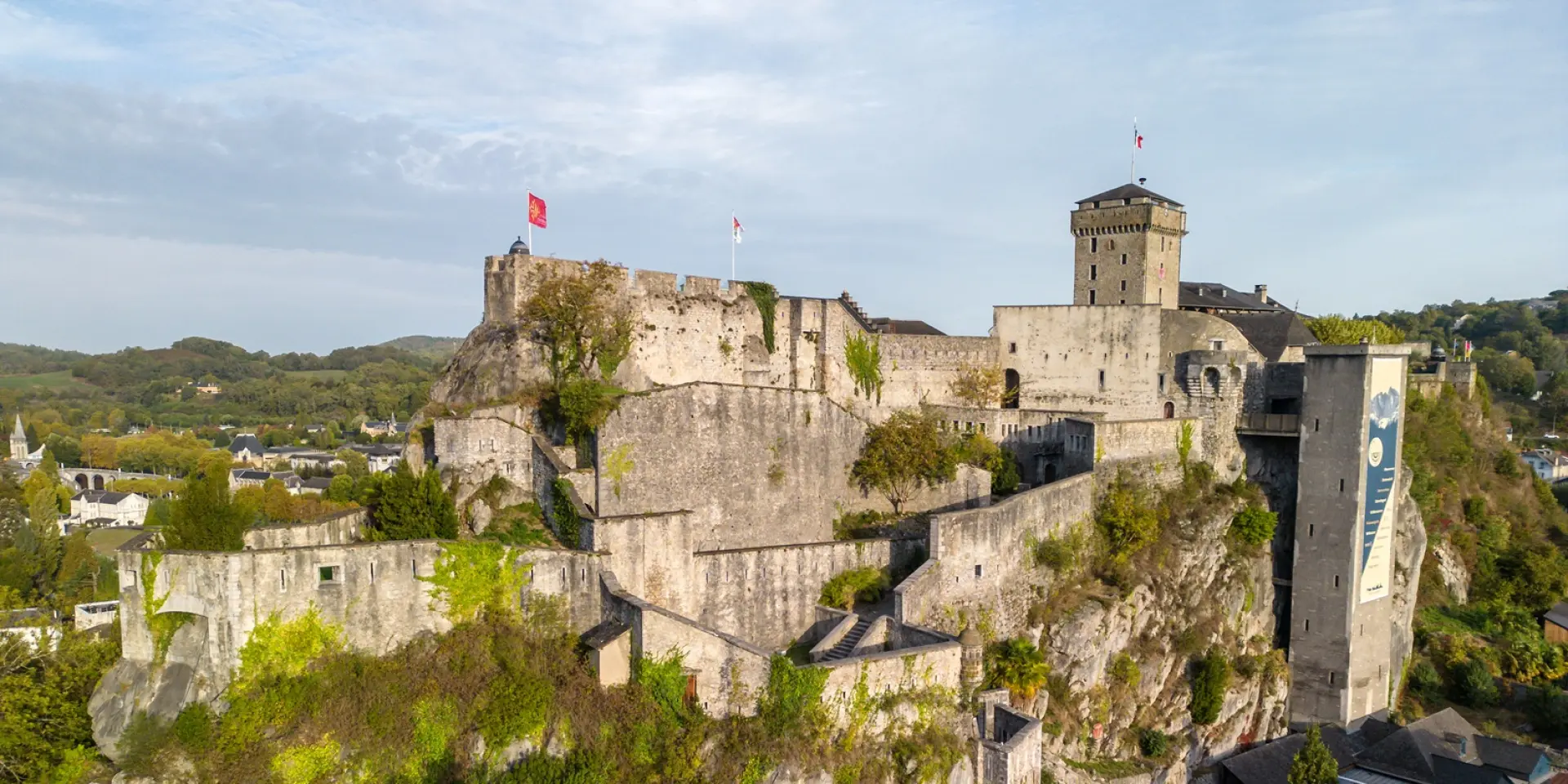
Lourdes Castle, a grand stone structure offering panoramic views of the town and the Pyrenees, has been listed as a ‘Historic Monument’ since 1995. It invites you on a journey through time to discover a history spanning 1,000 years. Lourdes, having been besieged on numerous occasions, lost part of its archives, which were either looted or burnt. However, the fortified castle has always remained impregnable.

Why you’re going to love it!

A strategic stronghold  and a defensive system

The first to make use of the strategic position of the rock on which the castle stands were the Romans during the conquest of Gaul.

Then, in the 11th and 12th centuries, the fortified stronghold became the seigneurial residence of the Count of Bigorre. It subsequently became a stronghold from which to control the roads in the foothills, which were contested by various princes and political leaders in the south of France.

Its role in defending the local population enabled the people of Lourdes to take refuge there during numerous conflicts, such as the Albigensian Crusade and the Wars of Religion. This is why, over the centuries, the castle developed a range of defensive features such as the drawbridge, the portcullis, the watchtowers, the ramparts, the artillery platform and the keep. The keep, built in the 14th century, towered over three other towers that have since disappeared.

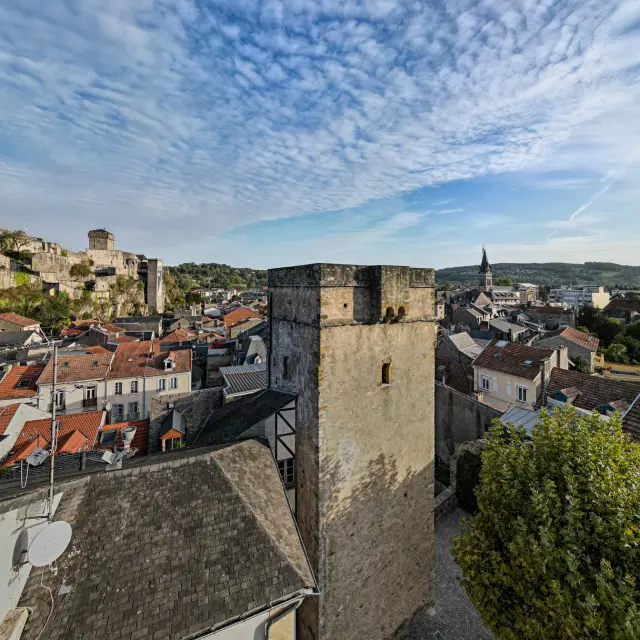
In the heart of the town, only one tower remains standing: the Garnavie Tower, also known as the Guigne Tower. This former watchtower, part of the town’s ramparts, is, along with the castle, the sole remnant of Lourdes’s defensive system.
Military architecture adjusted over time remarkably well-preserved

In 1590, during the reign ofHenry IV, the fortress was converted into a royal estate.

In the 17th and 18th centuries, it was known asthe ‘Bastille of the Pyrenees’ due to its new function as a prison. Indeed, the king would imprison his opponents in the keep on the basis of a simple lettre de cachet. At the same time, its role as a stronghold was not neglected. A governor was in charge of a military garrison to ensure the security and protection of the territory.

In 1685, King Louis XIV’s chief military engineer and architect, the Marquis de Vauban, proposed improvements. However, these were only partially carried out by his successors.

In 1889, the Royal Engineers developed the castle’s defence system. They gave it a new look and added numerous buildings, notably the powder magazine.

What’s in store for you
An exceptional panorama

From the southern viewpoint or the keep, there is a 360° panoramic view of Lourdes, the entrance to the Lavedan valleys and the Sanctuary of Our Lady of Lourdes.

Discovering our heritage

A monument and its museum that immerse you in the history of Lourdes, the Pyrenees and their inhabitants over the centuries.

An enchanting setting

An entire miniature village awaits you up there: an inner courtyard, gardens, several buildings and even a little chapel!

Events all year round

‘Rendez-vous aux jardins’, European Heritage Days, as well as a medieval day and Halloween – a packed programme throughout the seasons!

One place, a thousand stories Key points to remember.

‘The fortified castle was, in all likelihood, built before the town […]. Its presence became a valuable safeguard for its neighbours. They therefore hastened to settle as close to it as possible, so that they could take refuge within its walls in the event of an attack. Neighbourhoods gradually sprang up, thus forming a small market town, initially surrounded by palisades which were later replaced by thick walls encircling the town, with gates at the main exits, the most important of which were surmounted by crenellated towers and fitted with arrowslits”.

Description by Eugène Duviau, Archivist of the town of Lourdes, 1909.

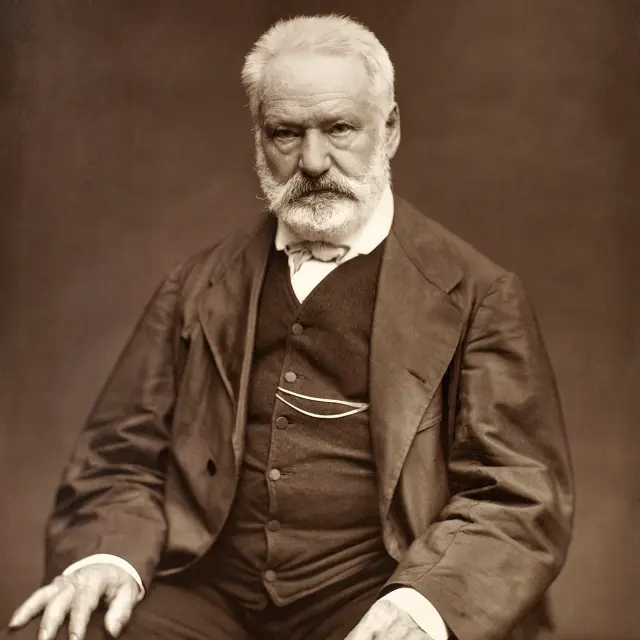
Victor Hugo by Étienne Carjat, 1876, Full
©

Victor Hugo by Étienne Carjat, 1876, Full

“Lourdes. A magical arrival.”

Victor Hugo on his arrival in Lourdes – summer 1843

Get ready for your outing!